Episodes
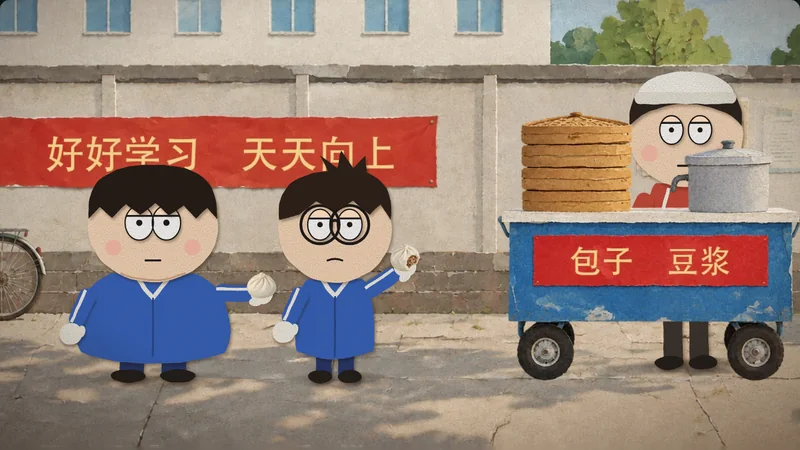 Episode 1, 2 minutesBreakfast in the BathroomSeventh grade. My deskmate had two questions for me, and one morning he asked them both at once. A true story.
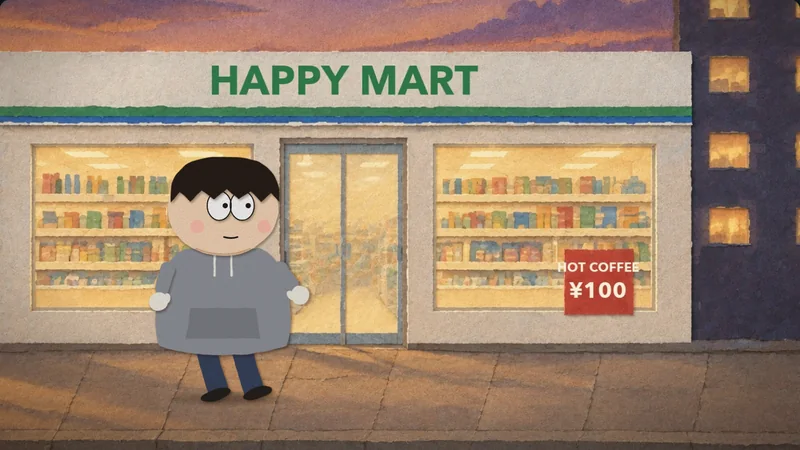
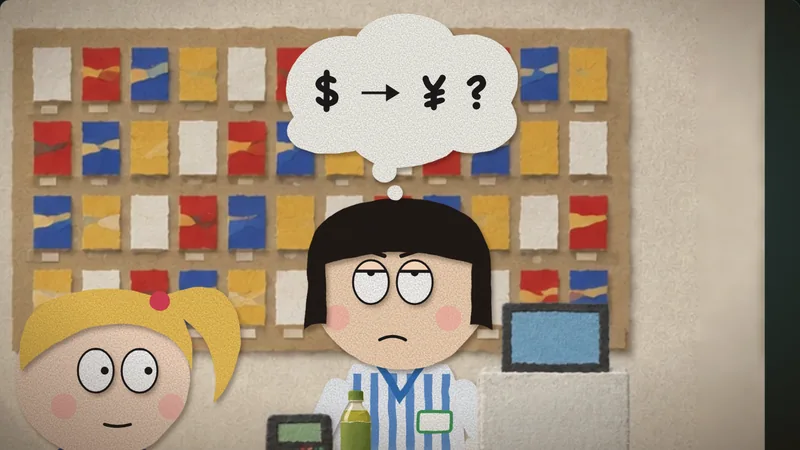
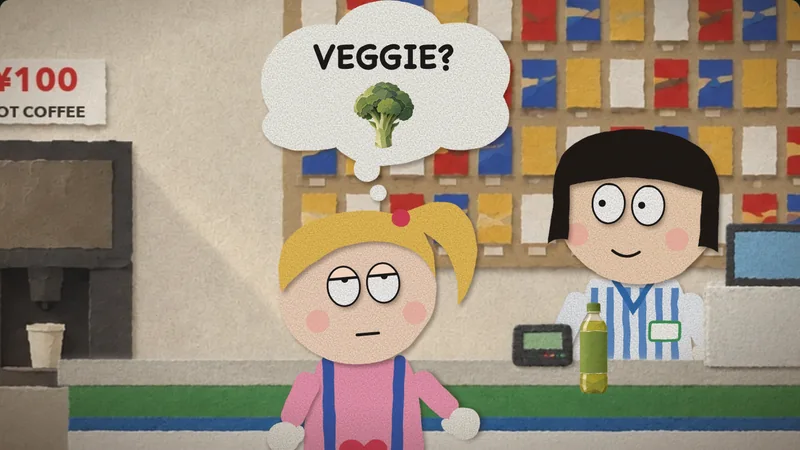 Episode 2, 2 minutesDo You Need a Bag?A convenience store in Fukuoka. A clerk who speaks no English, a customer who speaks no Japanese, and me in line behind them with a hundred-yen coffee. Also true.
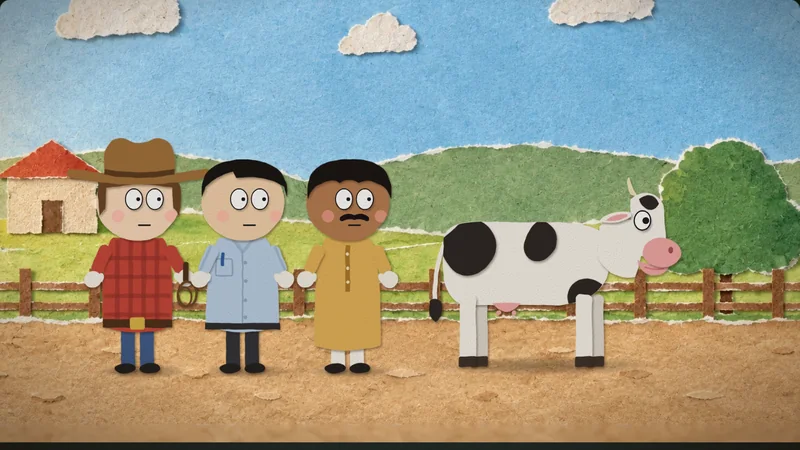
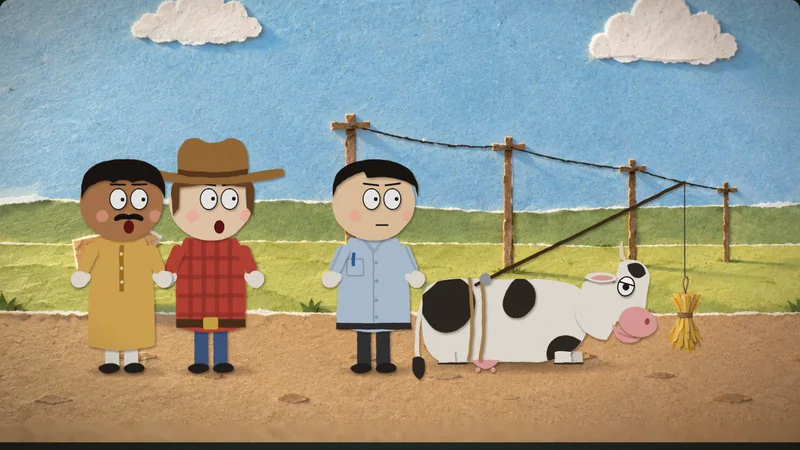
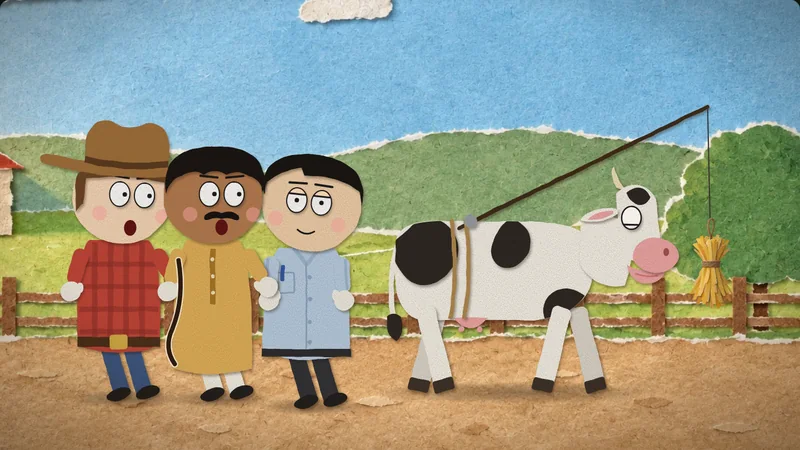 Episode 3, 2 minutesHow to Move a CowA Chinese man, an Indian man and an American are stuck behind a cow that won’t budge. Each has his own way to make it walk. An old joke, with a newer ending.
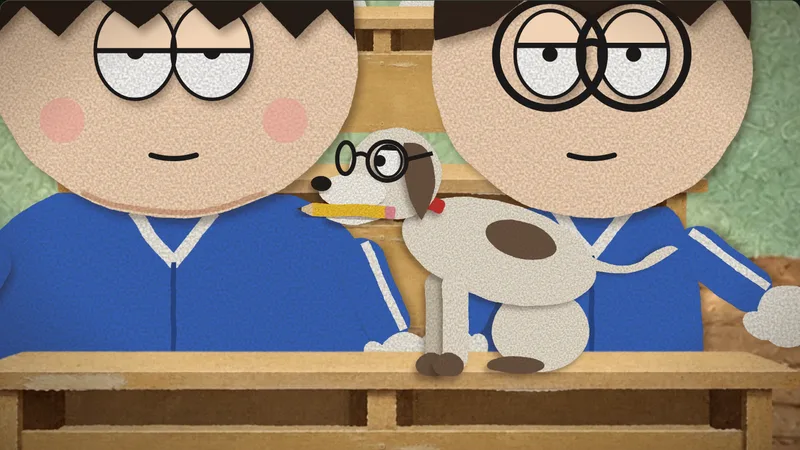 Episode 4, 2 minutesThe Dog Ate My HomeworkMy deskmate Bo never did his homework, but he always had an excuse. Then he rented a dog to prove one. I did my homework every morning, at breakfast.
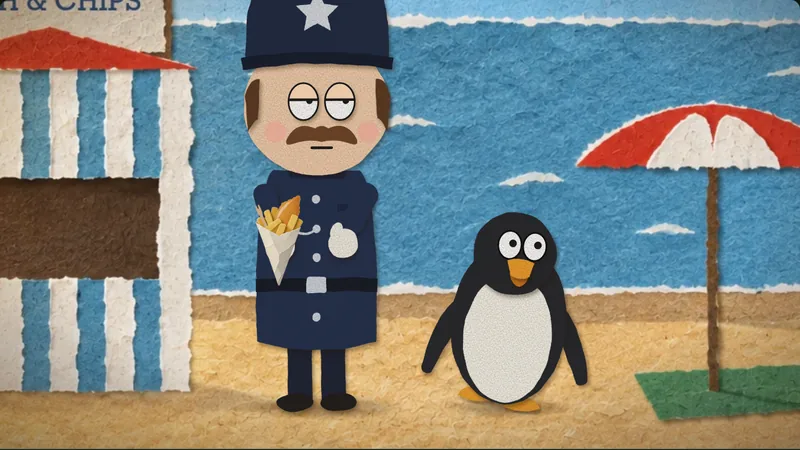
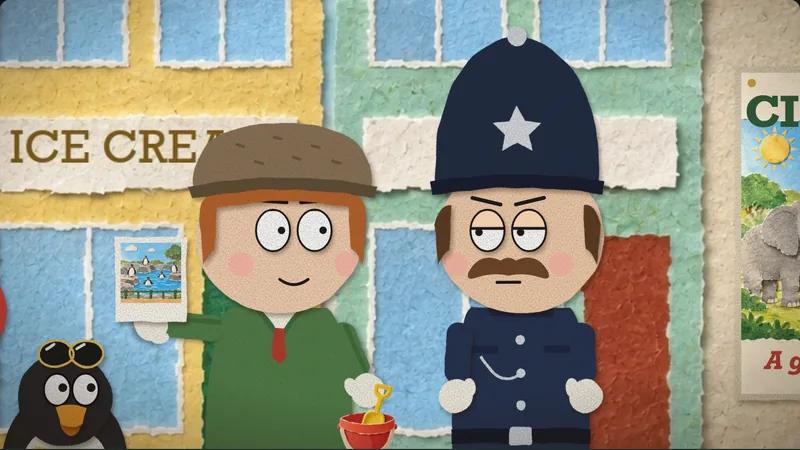 Episode 5, 2 minutesThe Penguin and the ZooA man buys a fish at the harbour, and a penguin follows it. A policeman tells him to take it to the zoo. The next day, there they are again.
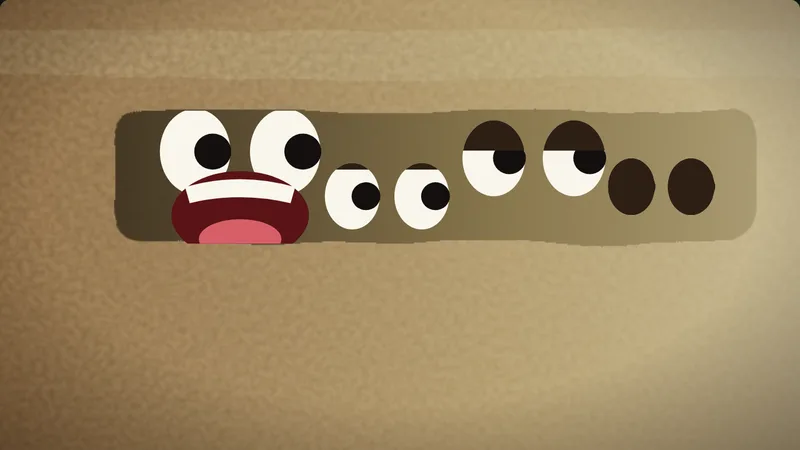 Episode 6, 2 minutesFour DogsAn American dog, a Polish dog and a Soviet dog meet in an alley behind a kitchen to compare notes on a dog’s life. Somebody in a box has been listening.
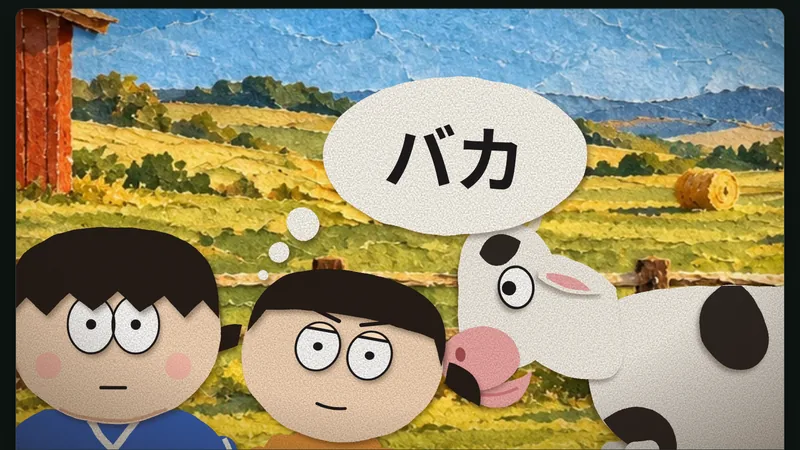 Episode 7, 2 minutesBaka Means CowMy cousin Yui visits her uncle Pedro’s farm in southern Spain, and Spain’s everyday word for a cow sounds, to Osaka-school ears, like the last thing you may call your aunt. Nobody insults anybody. It just sounds that way.
More jokes coming.
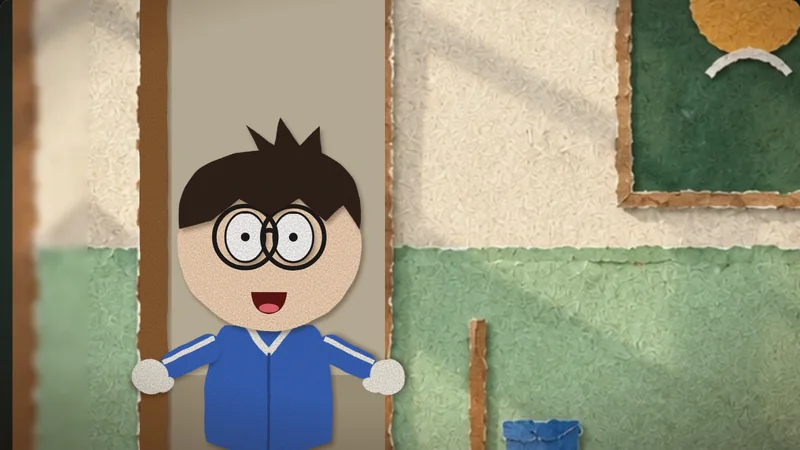
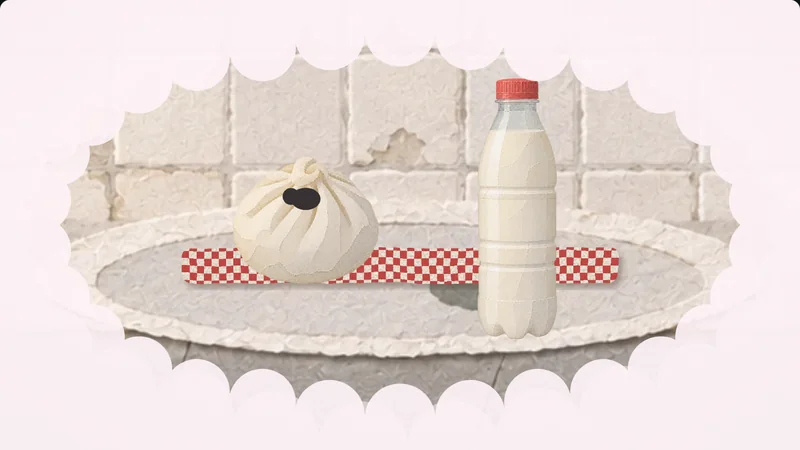
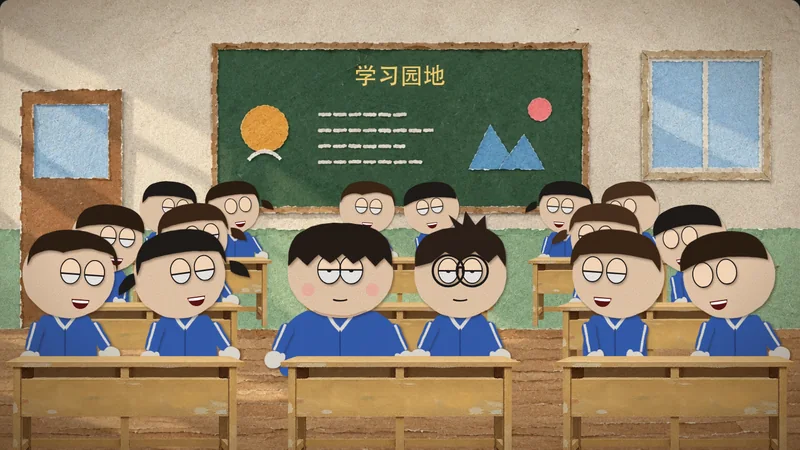
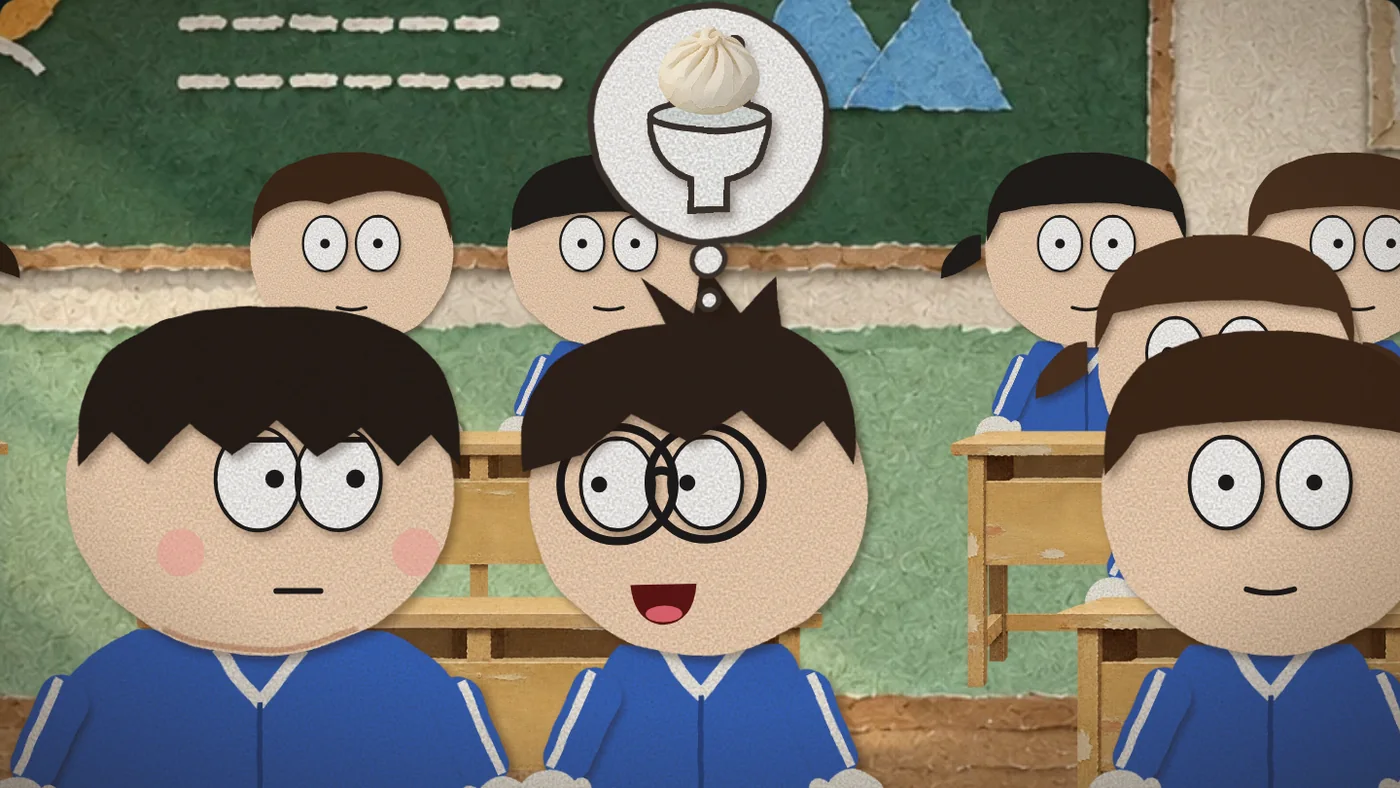
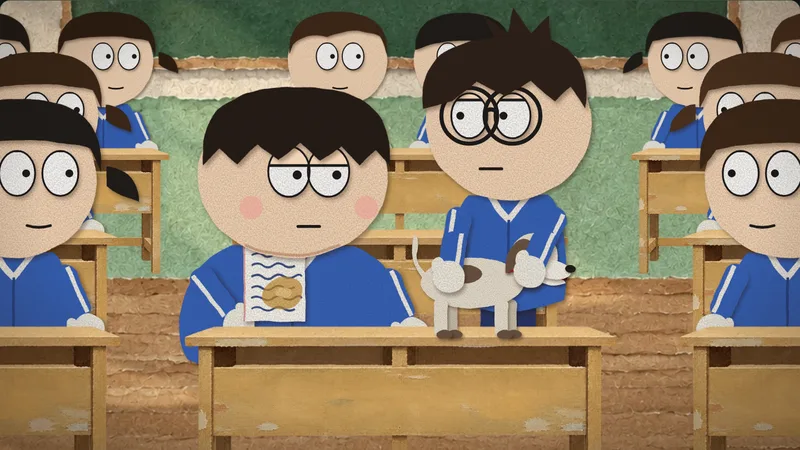
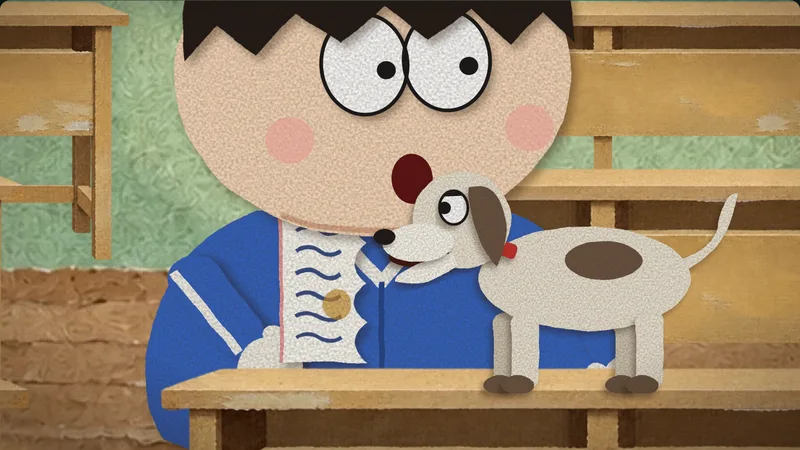
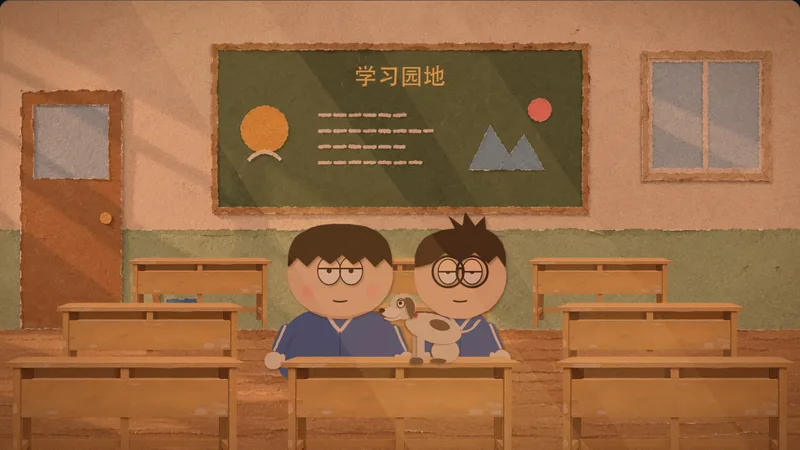
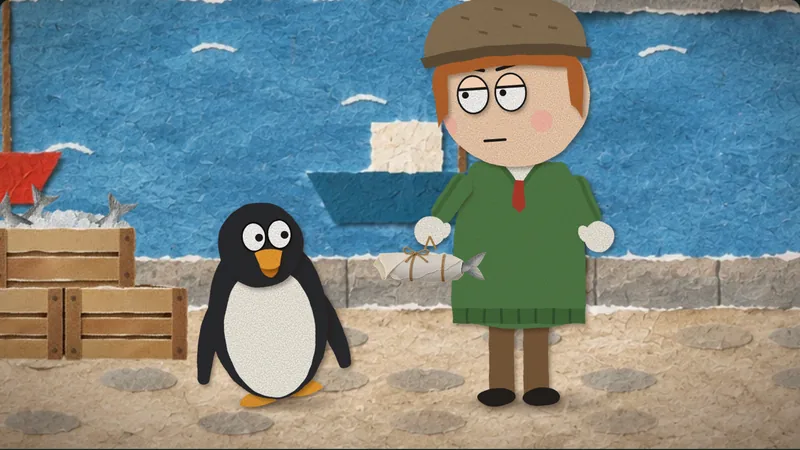
Two ways, then a third
The Three Little Pigs was painted by an image model, characters included: the world looked lovely, but every new action meant another round of drawings. Little Red Riding Hood was all paper drawn in code: any movement was a few lines, but the world looked plain.
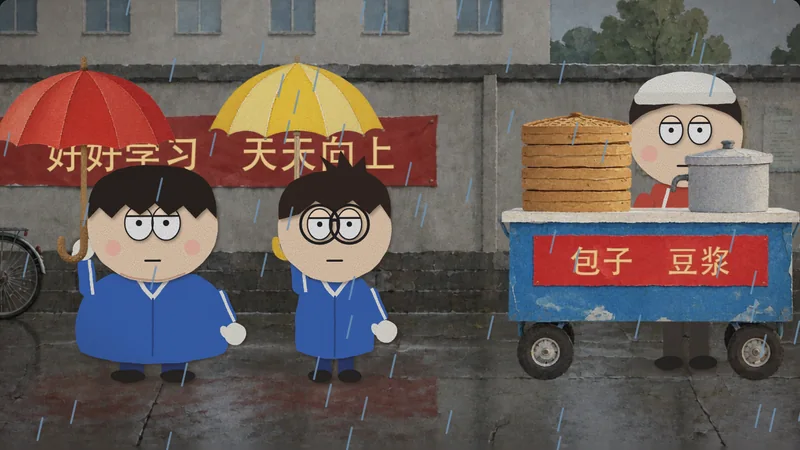
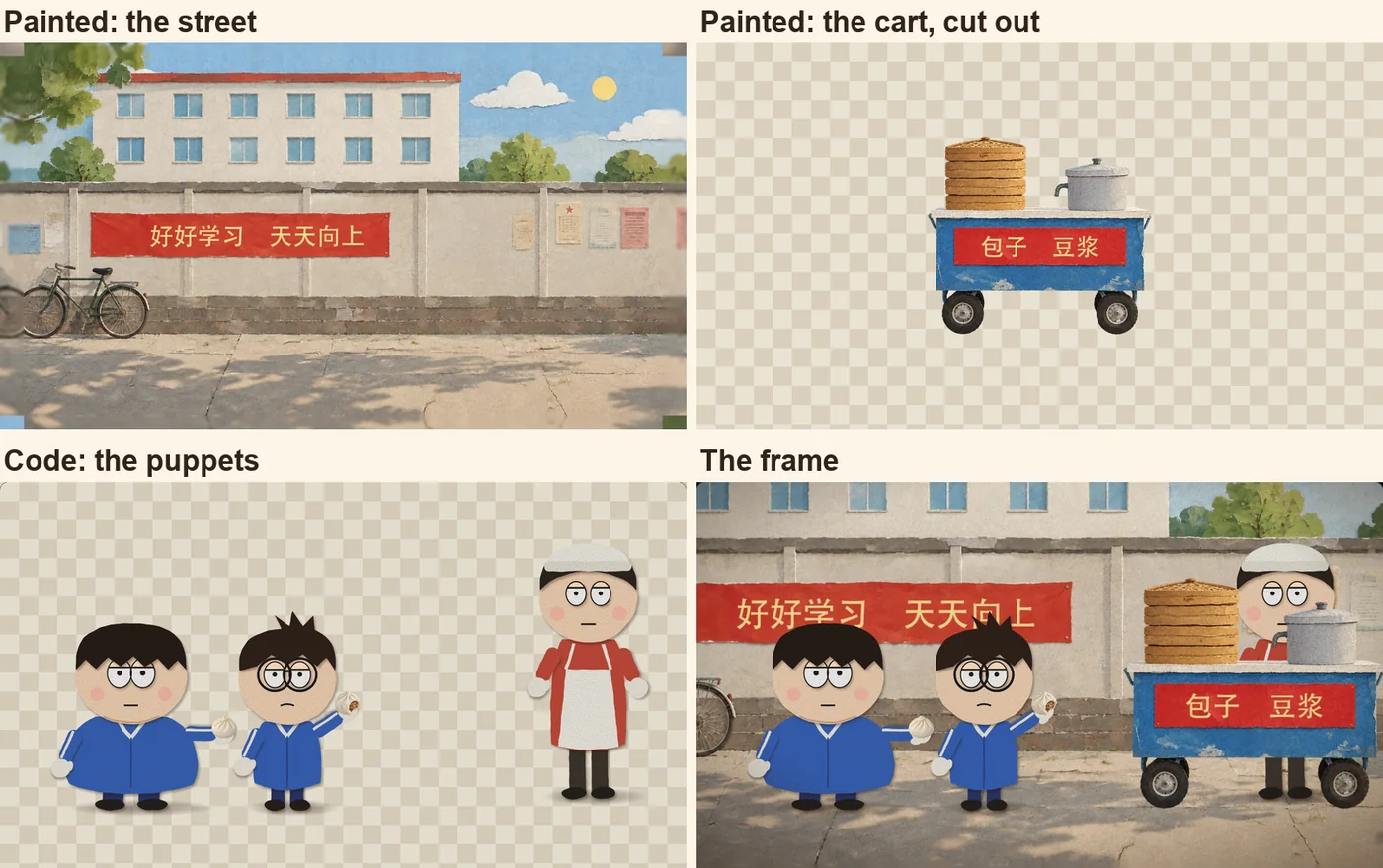
So we split the work by one question: does it move? Anything that stays put (streets, walls, desks, the bun cart) is painted by the image model. Anything with joints, a face or a change of shape (the people, the rain, a bitten bun, the hands of the clock) is a paper puppet moved by code. A painting never has to act, and a puppet never has to look like a painting.
Finding the look
Our puppets are flat paper with round heads, in the spirit of South Park. Behind them we tried flat paper, gouache and a torn-paper collage, and picked the collage, to let the image model give the world as much texture and light as it could.
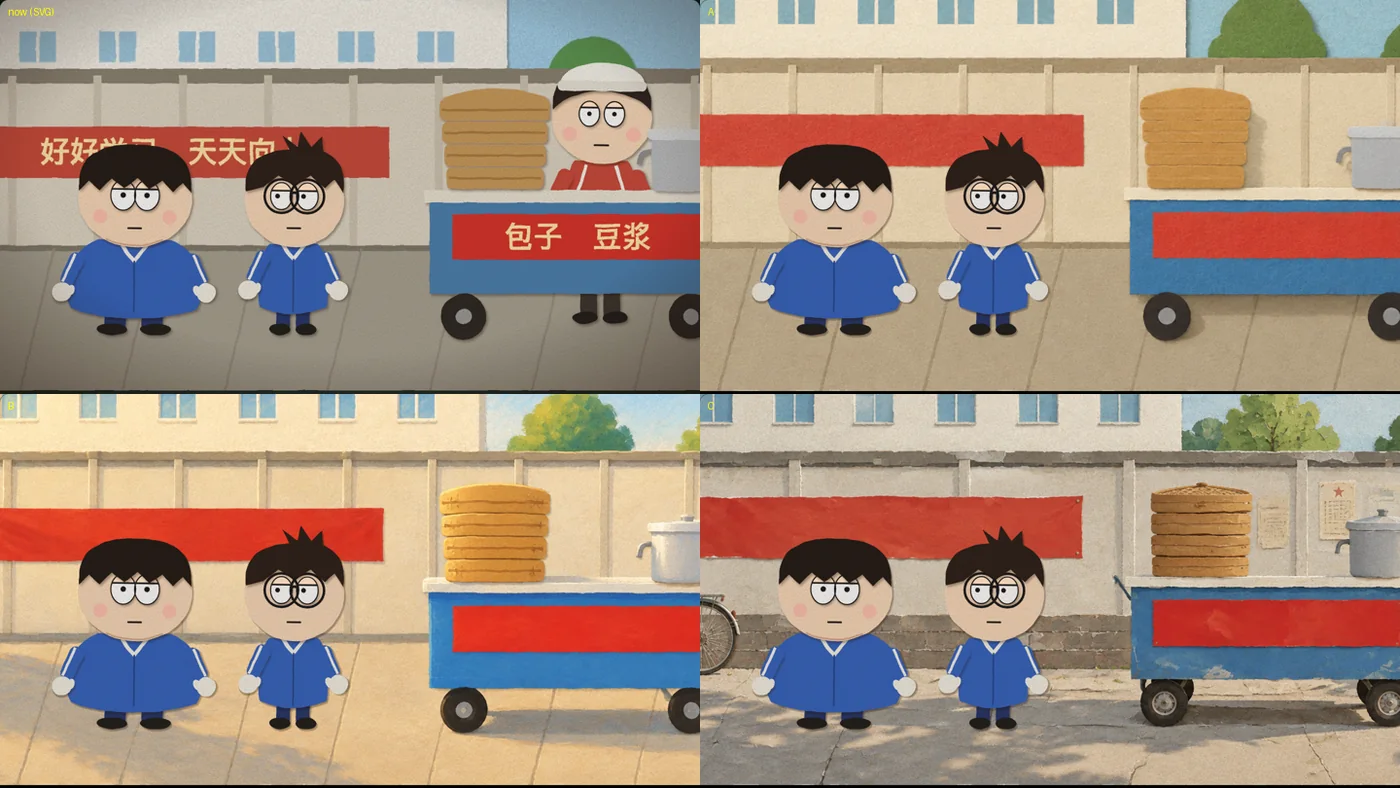
Every set was painted by redrawing our own code-drawn version in that style, so the puppets still stand where the scenes expect them. Signs and blackboards were painted blank and written on afterwards: image models still garble Chinese characters.
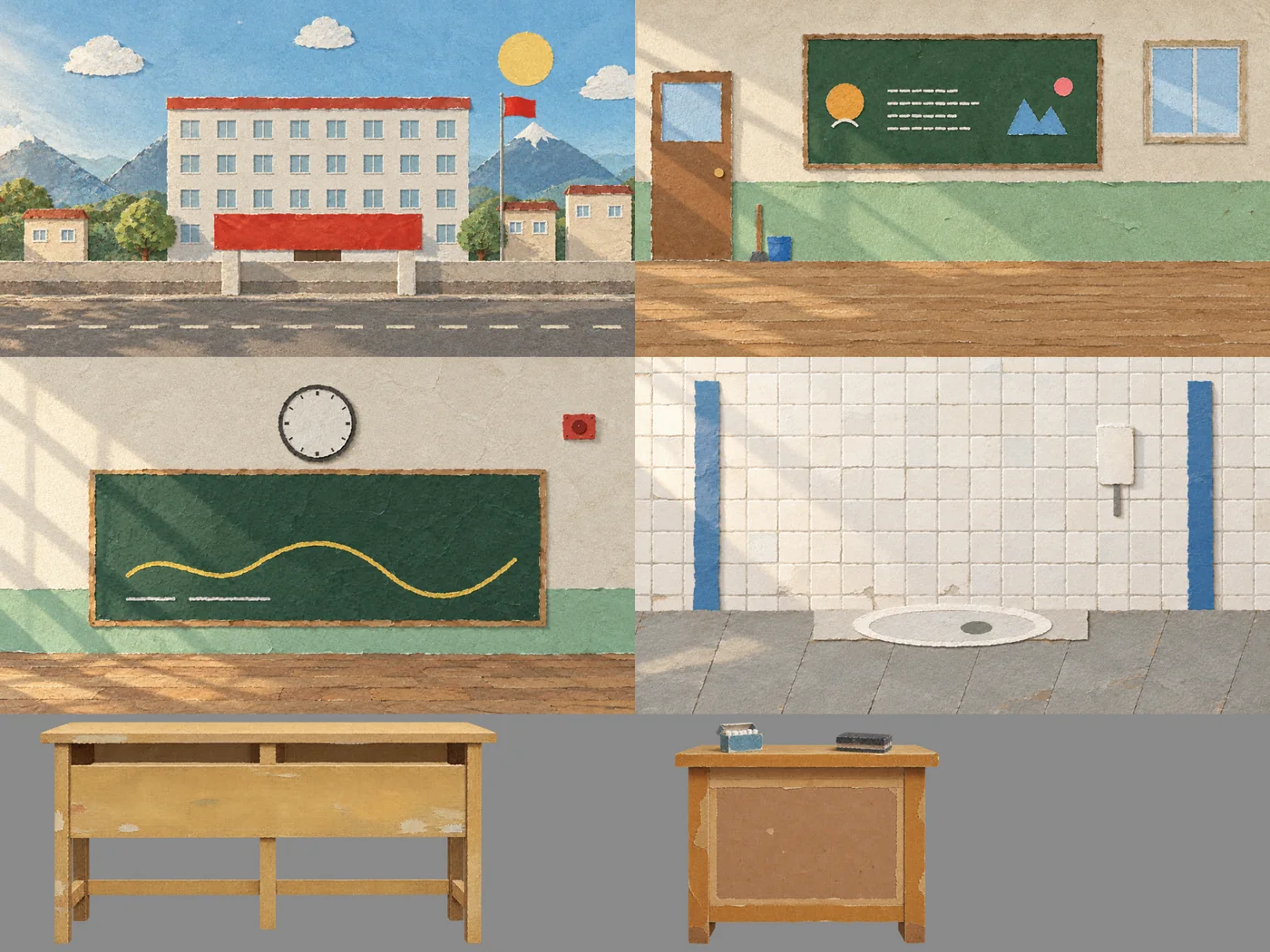
What the code still does
- The acting: mouths timed to every word, eyes that follow whoever is talking, a whole class turning its heads a frame or two apart.
- The joke's machinery: two thought bubbles (a bun and a toilet) pushing each other and merging.
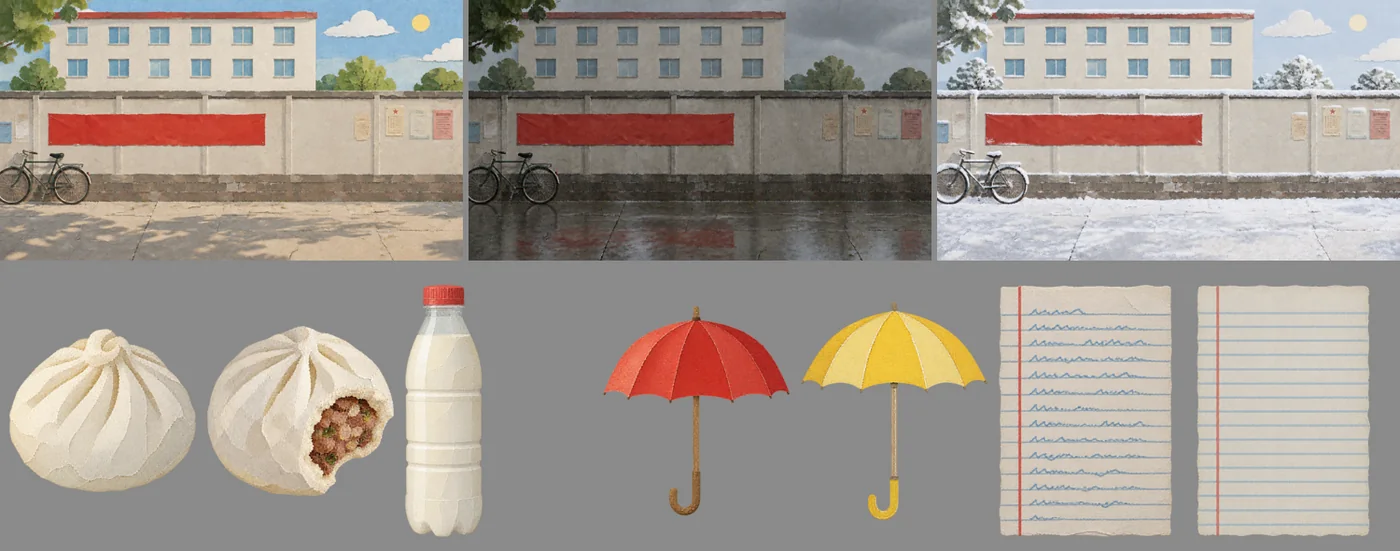
- Weather and small things: rain and snow over the painted street, a fly, the clock's hands.
- The film: cuts, close-ups, and a soft shadow under every puppet so it stands in the painted light.
A joke needs its setup
The first version didn't land. Bo's slip ("Wanna go eat breakfast… in the bathroom?") came out of nowhere. The fix was story, not animation: first we show his two everyday questions, "Breakfast?" every morning and "Bathroom?" after every class; then, the morning he comes in starving, both wants at once, as two bubbles that collide. Same lesson as Little Red Riding Hood: set up everything the punchline needs before anyone animates a frame.
The later episodes
Episode 2 was made in one night: the user told the story at bedtime, and a fresh session wrote, painted, built and checked it before morning. The clerk speaks Japanese with English subtitles, so the audience understands both sides while neither character does. Episode 3 tested the Papermorph Skill itself: a new session started from nothing but the Skill and the joke, asked a few questions, and checked its own work.
Episode 4 was filmed twice: the story worked, but every object the jokes hang on was a few pixels in a wide shot. Four agents filmed each scene again, and the main scene went from 6 shots to 22, with no new paintings. For episode 5 the user said only: make one, without me. A coordinator ran agents, and a director and reviewers sent scenes back for three rounds; the running gag (he stops, the penguin stops half a step late) came out of the first review.
Episode 6 is the joke Ronald Reagan used to tell about three dogs, with a fourth added and a last line that rhymes; after the first cut the user asked for the dogs to shout their own "Woof!". Episode 7 came from outside: Yuya made it with the same Skill and sent it in as a pull request.
The numbers
Why we're keeping this one. The paintings carry the look, the puppets carry the acting, and neither has to do the other's job. The sets and props carry over to the next joke. This is the method we're building the Papermorph Skill's picture books on.